
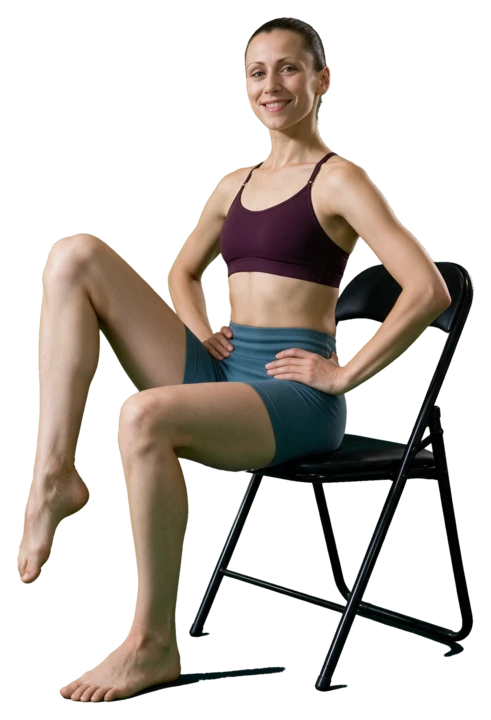
Everyday strength
Makes daily jobs easier, like getting up from a chair, climbing stairs and carrying groceries (US National Institute on Aging).
A gentle chair Pilates guide for women in their 40s, 50s and beyond. Nine moves, one ordinary chair and a simple weekly plan. No getting down on the floor, and no special equipment.
Sit.Stand.Balance.
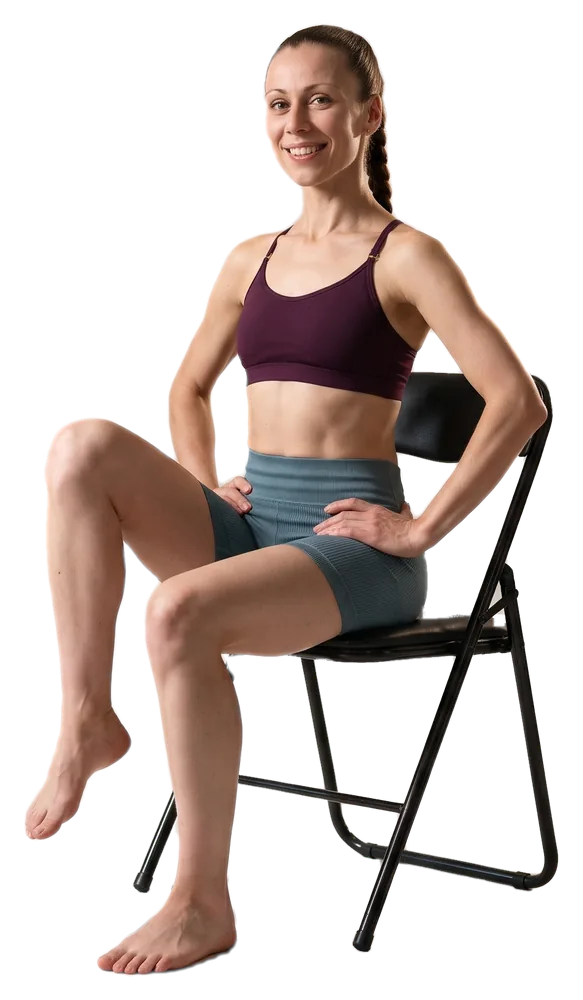
In chair Pilates, an ordinary chair does the work of the mat: you sit on it, or hold it while you stand.
9 moves.
1 chair.
No getting down on the floor, and no special equipment.
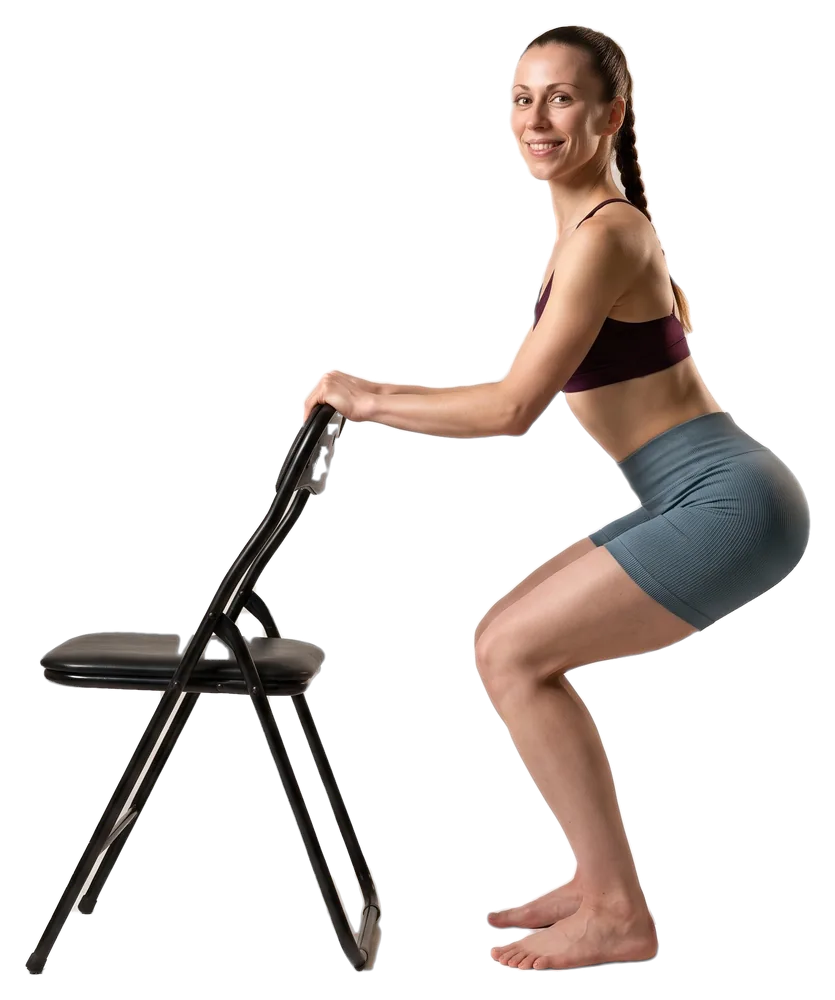
Start
sitting
down.
Level 1 is done entirely in the chair.
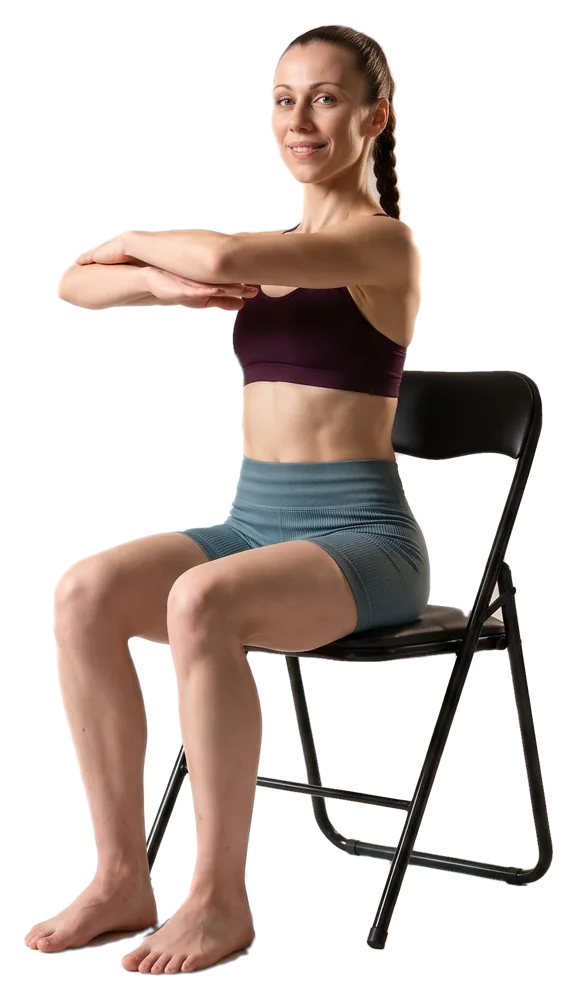
10–15
minutes
to start.
Two short sessions a week in weeks 1 and 2.
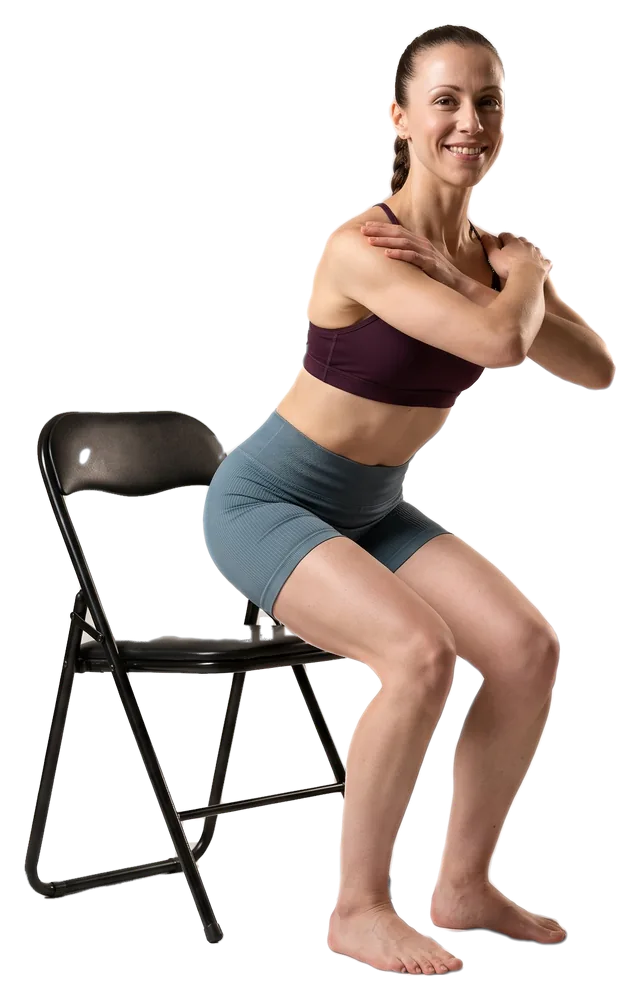
The chair
catches
you.
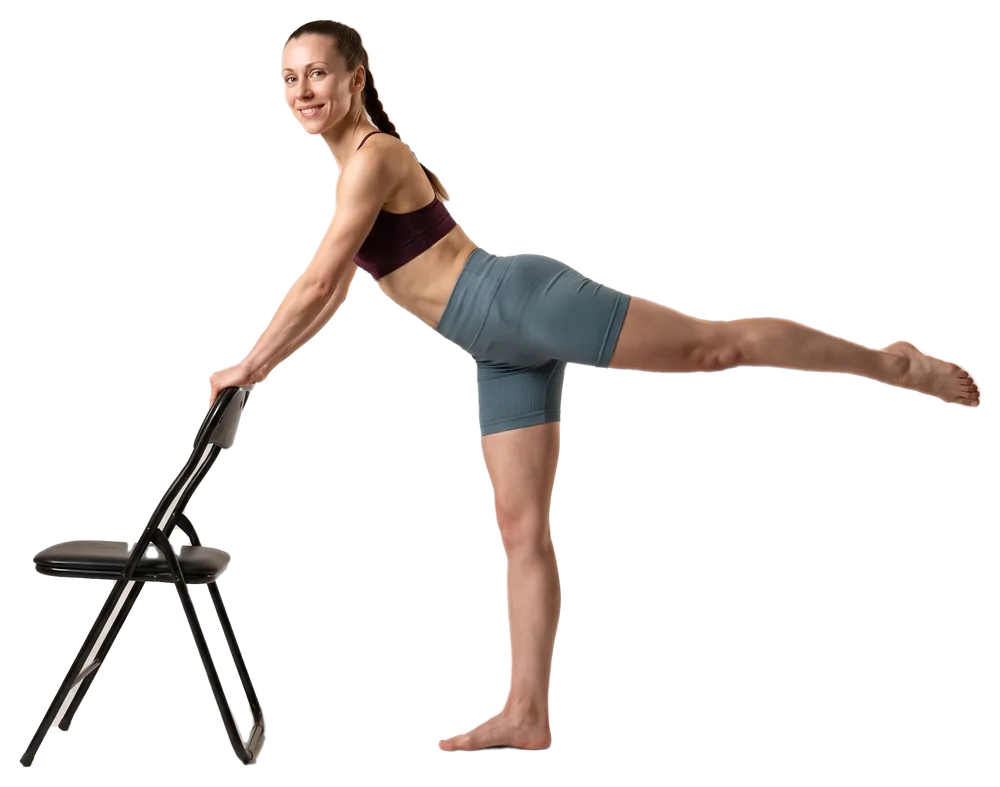
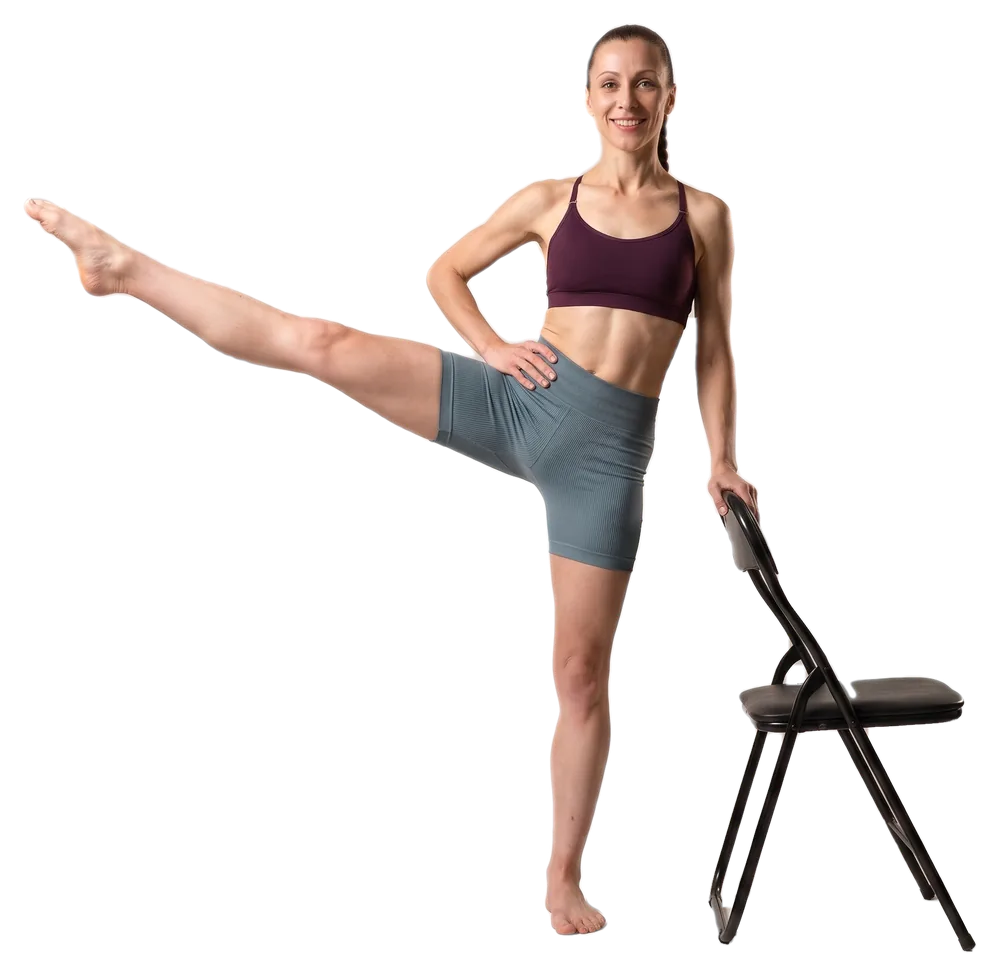
Balance moves with the chair right beside you.
Print it.
Tick it.
Keep going.
A 12-week tracker to keep near your chair.
Pilates is a mind-body exercise that works on strength, core stability, flexibility, muscle control, posture and breathing. This is what US health sources and published research say it can do for you.
Makes daily jobs easier, like getting up from a chair, climbing stairs and carrying groceries (US National Institute on Aging).
A 2024 review of 39 studies found Pilates can improve balance in older adults, both standing still and moving.
A 2021 review of trials in adults aged 60 and over found Pilates improved flexibility and everyday physical function.
A review of 25 studies in adults aged 50 and over found chair exercise improved arm strength and leg function.
Researchers who reviewed 51 studies in adults over 55 describe Pilates as safe and adaptable (2021).
Being active can ease low mood and anxiety and help you sleep better (US National Institute on Aging).
of muscle mass is lost every ten years from about age 30, and faster after 60 (Volpi and colleagues, 2004).
More than one in four adults aged 65 and over fall each year. Balance activities lower that risk (CDC).
a week of muscle-strengthening activity: what the US National Institute on Aging recommends.
| Week | Level | Day 1 | Day 2 | Day 3 | How I felt |
|---|---|---|---|---|---|
| 1 | |||||
| 2 | |||||
| 3 |
Print the tracker and keep it near your chair. Check a box after each session, and write a word or two about how you felt. The weekly plan grows with you:

Pilates is a mind-body exercise that works on strength, core stability, flexibility, muscle control, posture and breathing. In chair Pilates, an ordinary chair does the work of the mat: you sit on it, or hold it while you stand. There is no getting down on the floor. Researchers who reviewed 51 studies in adults over 55 describe Pilates as safe and adaptable (2021).
Yes, it is built for a gentle start. Level 1 is done sitting down, and everyone starts there, even if the moves look easy. “It’s never too late to start being physically active,” says the US National Institute on Aging. If you build up slowly, you can usually start without seeing a doctor first. Check with your doctor first if you have a heart condition, high blood pressure, dizzy spells, osteoporosis, arthritis, diabetes or another long-term condition, have had a fall or recent surgery, or haven’t exercised for a long time.
Our weekly plan starts with two sessions of 10 to 15 minutes in weeks 1 and 2, then three sessions of 15 to 20 minutes in weeks 3 and 4, and three sessions of 20 to 30 minutes from week 5. The US Physical Activity Guidelines recommend muscle-strengthening activities on 2 or more days a week, and the US National Institute on Aging advises not working the same muscles two days in a row.
A solid, steady chair with no wheels, a firm, flat seat and no arms. Your feet should be flat on the floor with your knees at about a right angle, and the chair shouldn’t slide when you press on the backrest.
A 2024 review of 39 studies found Pilates can improve balance in older adults, both standing still and moving. More than one in four adults aged 65 and over fall each year, and balance activities lower that risk (CDC). Level 3 of the guide trains balance with the chair right beside you.
Check with your doctor or physical therapist first. Then start with the Easier version of each move, slowly and with small movements, and build up while it stays comfortable. Some aches or stiffness at first are normal (CDC), but stop any move that gives you sharp pain.
A 14-page e-book (PDF) you can read on your phone, tablet or computer, or print. It has 9 moves in 3 levels with clear photos, step-by-step instructions and easier and harder versions, a simple weekly plan, a 12-week tracker to print and a video for every move, through a QR code or link in the guide. It downloads instantly after purchase.
We wrote this page and the guide in our own words, using the US health sources and research below. Web pages were checked in November 2026.
Nine moves, one ordinary chair and a simple weekly plan, with a video for every move.
Ready to stand? See Tai Chi for Beginners →