
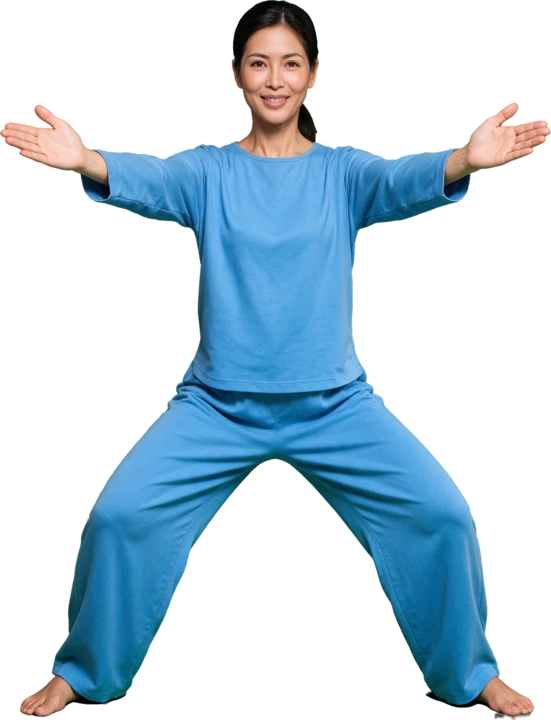
Better balance
Tai chi may help improve balance and prevent falls in older adults (US National Institutes of Health).
A gentle tai chi guide for women in their 40s, 50s and beyond. Twelve simple moves, a 28-day planner and a 14-day fat-burn plan. No equipment, just a little space.
Breathe.Root.Flow.
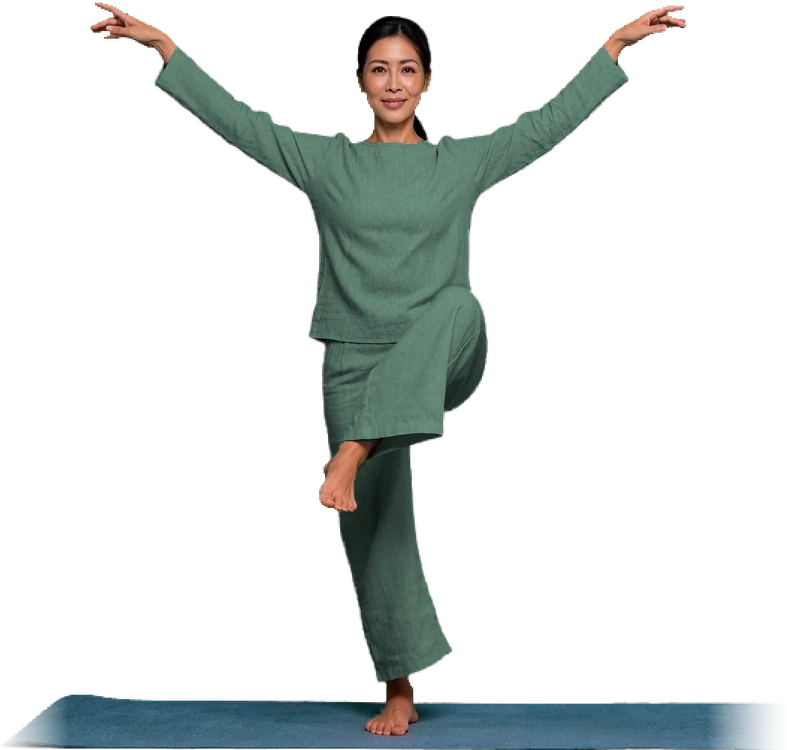
Tai chi is sometimes called “moving meditation”. Here is what your guide brings to the living room.
12 moves.
3 levels.
Zero equipment.
A clear spot about the size of a yoga mat is enough.
Print it.
Stick it.
Check it off.
Your 28-day planner, made for the fridge door.
14 days.
Livelier
sessions.
The 14-day fat-burn plan pairs tai chi with brisk walks.
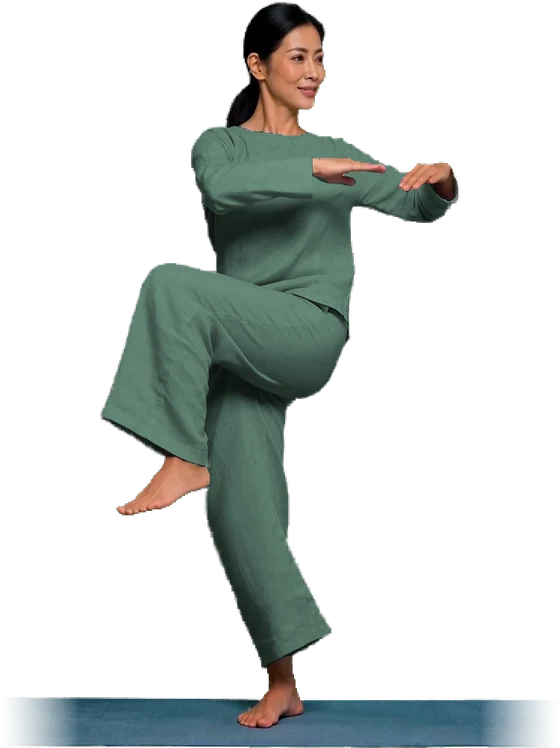
Moving
meditation.
Start with 15 calm minutes: Session A, Gentle Flow.
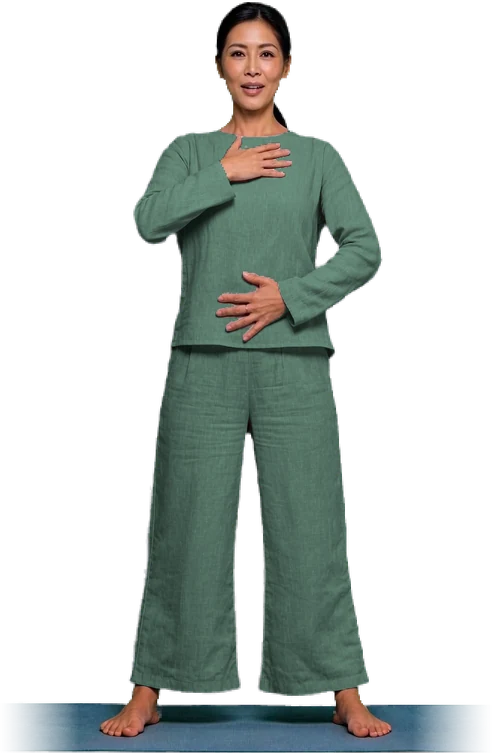
A video for
every move.
Scan the code in the guide, press play and follow along.
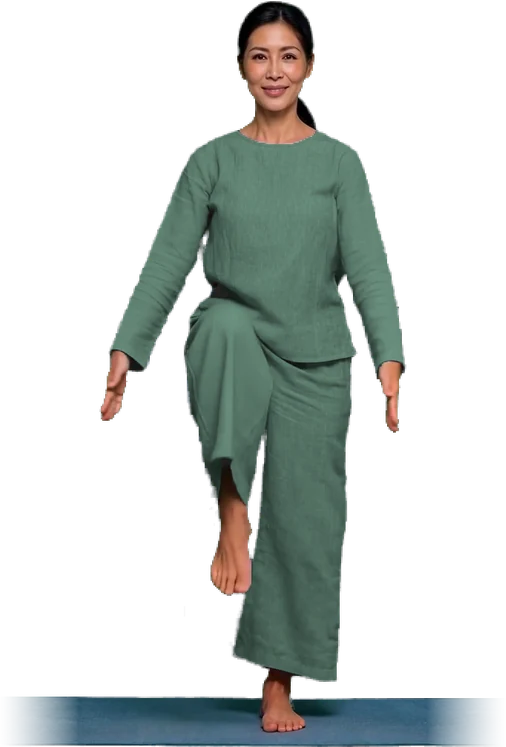
Tai chi joins slow, gentle movements and postures with controlled breathing and a calm, focused mind. This is what US health sources and published research say it can do for you.
Tai chi may help improve balance and prevent falls in older adults (US National Institutes of Health).
The CDC names tai chi as a good example of exercise that makes your legs stronger and improves balance.
US arthritis guidelines strongly recommend tai chi for knee osteoarthritis (US National Institutes of Health).
A 2023 review of 23 studies suggests tai chi may ease anxiety and low mood.
A 2020 review of 20 studies with 1,703 people found tai chi improved sleep quality.
A 2021 review of 31 studies found tai chi lowered blood pressure, compared with no exercise.
fewer people had a fall with tai chi, in a review of exercise studies in adults 60 and over (Cochrane, 2019).
(1.8 cm) smaller waist than a no-exercise group after 12 weeks of tai chi, in adults 50 and over with extra belly fat (Siu, 2021).
a week of moderate activity, at least: what the US Physical Activity Guidelines recommend for adults.
Twelve moves in three levels of four. Everyone starts at Level 1, where both feet stay down, and moves up when it feels comfortable. The steps, breathing cues and a video for every move are in the guide.
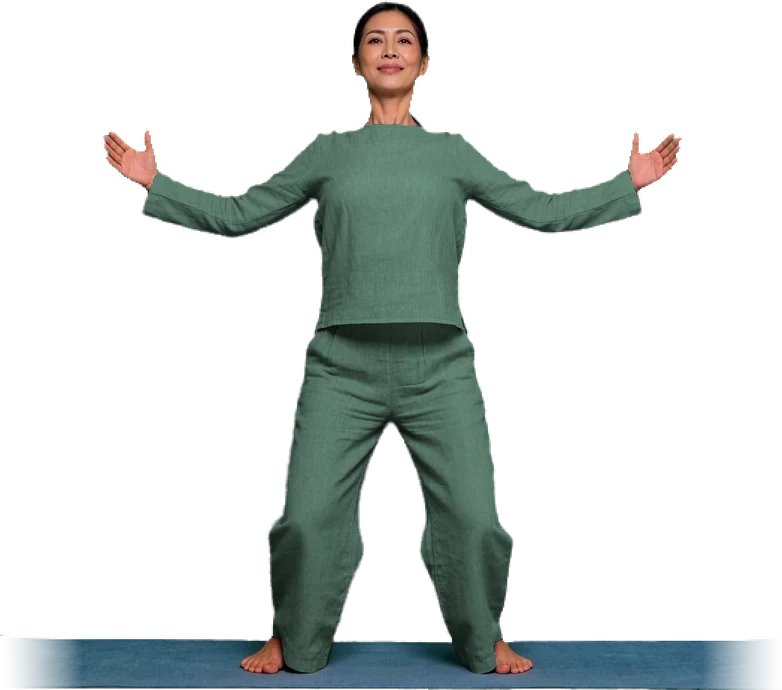
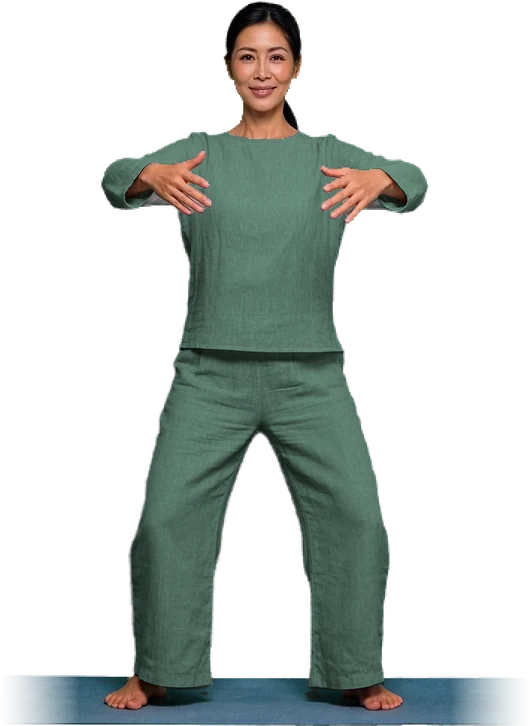
Both feet stay down.
4 moves, each with photos, steps and a video in the guide
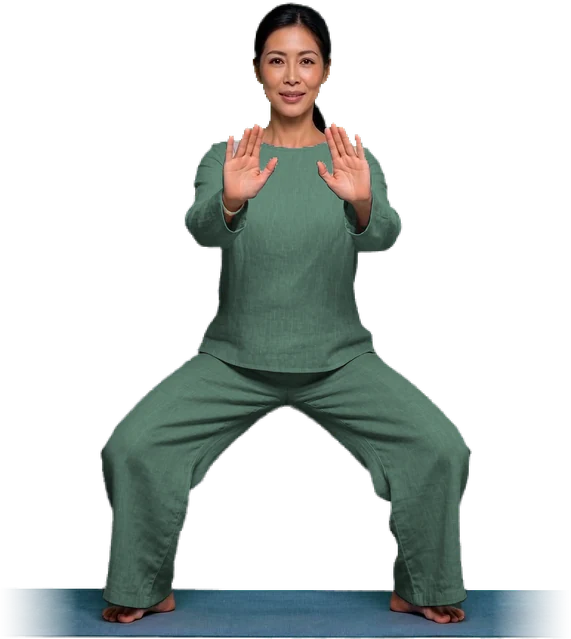
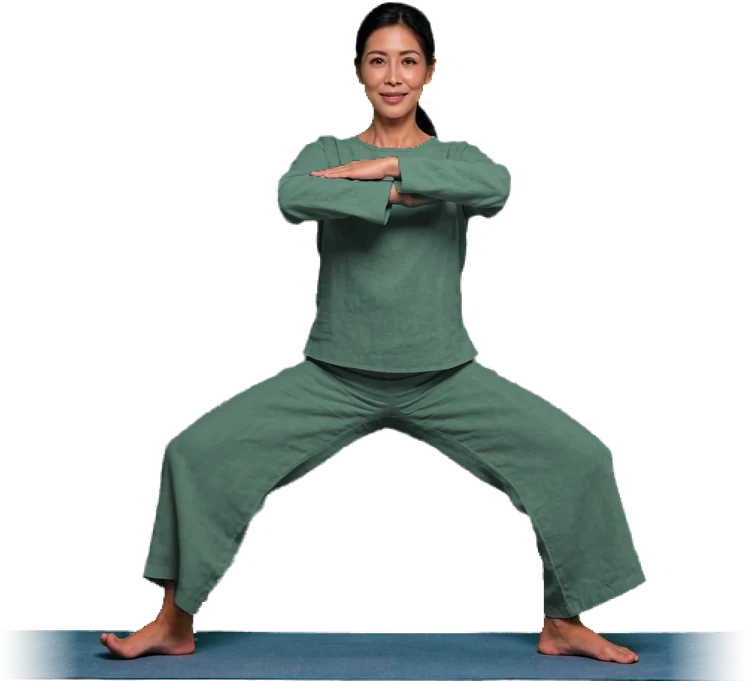
Wider stances, weight on the move.
4 moves, each with photos, steps and a video in the guide
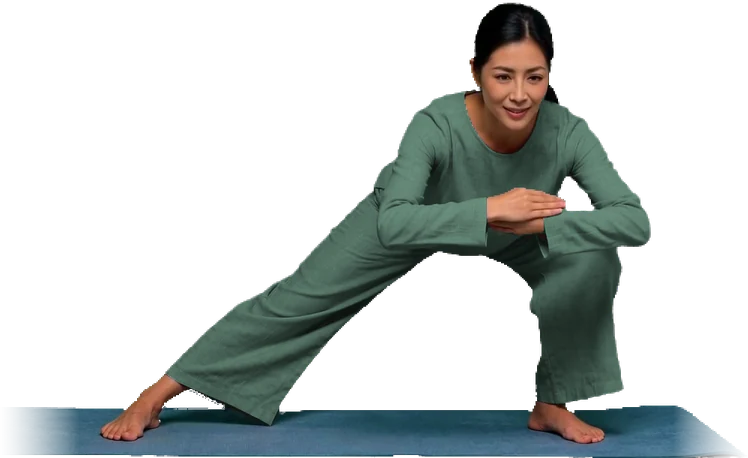
Moments on one leg, bigger moves.
4 moves, each with photos, steps and a video in the guide
Four weeks, one level at a time. Print the planner, stick it on the fridge and check the circle on each day you finish. When Levels 1 and 2 feel comfortable, the 14-day fat-burn plan brings longer, livelier sessions.

Tai chi joins slow, gentle movements and postures with controlled breathing and a calm, focused mind. It began as a martial art in ancient China and over time became more focused on health (US National Institutes of Health). It is sometimes called “moving meditation”. Done for health, tai chi counts as a form of qigong, a large family of Chinese movement and breathing exercises.
Tai chi is low impact and needs no equipment, and Tai Chi for Beginners is written for women in their 40s, 50s and beyond. Everyone starts at Level 1, where both feet stay on the floor. If you build up slowly, you can usually start without seeing a doctor first (US National Institute on Aging). Check with your doctor first if you have a heart condition, high blood pressure, dizzy spells, osteoporosis, arthritis, diabetes or another long-term condition, have had a fall or recent surgery, or haven’t exercised for a long time.
The three sessions in our guide take 15 minutes (Gentle Flow), 20 to 25 minutes (Root & Balance) and 25 to 30 minutes (Fat-Burn Flow), including a 3-minute warm-up and cool-down. Across a whole week, the US Physical Activity Guidelines recommend at least 150 minutes of moderate activity for adults. Tai chi is usually rated as light activity, so the 14-day plan adds brisk walks to lift the effort.
No. A clear spot about the size of a yoga mat is enough, with a counter, wall or sturdy chair within reach for the one-leg moves. Wear loose, comfortable clothes and flat, non-slip shoes, or go barefoot on a non-slip floor.
Tai chi may help improve balance and prevent falls in older adults (US National Institutes of Health). In a 2019 Cochrane review of exercise studies in adults 60 and over, 20% fewer people had a fall with tai chi. Be patient: it may take at least three months before you notice better balance (CDC).
In a 2021 trial in adults 50 and over with extra belly fat, the tai chi group ended up with a waist about 0.7 inches (1.8 cm) smaller than a no-exercise group after 12 weeks (Siu, 2021). Our 14-day fat-burn plan pairs tai chi with brisk walks. Think of it as a strong start, not the finish line.
Tai chi appears to be safe. In a review of 24 studies, problems were no more common with tai chi than with other activities or none (US National Institutes of Health). Keep your knees softly bent, stand by a counter or sturdy chair for one-leg moves, and stop right away if you feel chest pain, dizziness or sharp pain.
A 16-page e-book (PDF) you can read on your phone, tablet or computer, or print. It has 12 moves in 3 levels with photos, breathing cues and easier and harder versions, three ready-made sessions, a 28-day planner, a 14-day fat-burn plan and a video for every move, through a QR code or link in the guide. It downloads instantly after purchase.
We wrote this page and the guide in our own words, using the US health sources and research below. Web pages were checked in November 2026.
Twelve simple moves, a planner for the fridge and a video for every move.
Prefer to sit down? See the Chair Pilates Guide →